Skip to the main content
Ants, Cells & Atoms

Life and matter below the width of a hair.

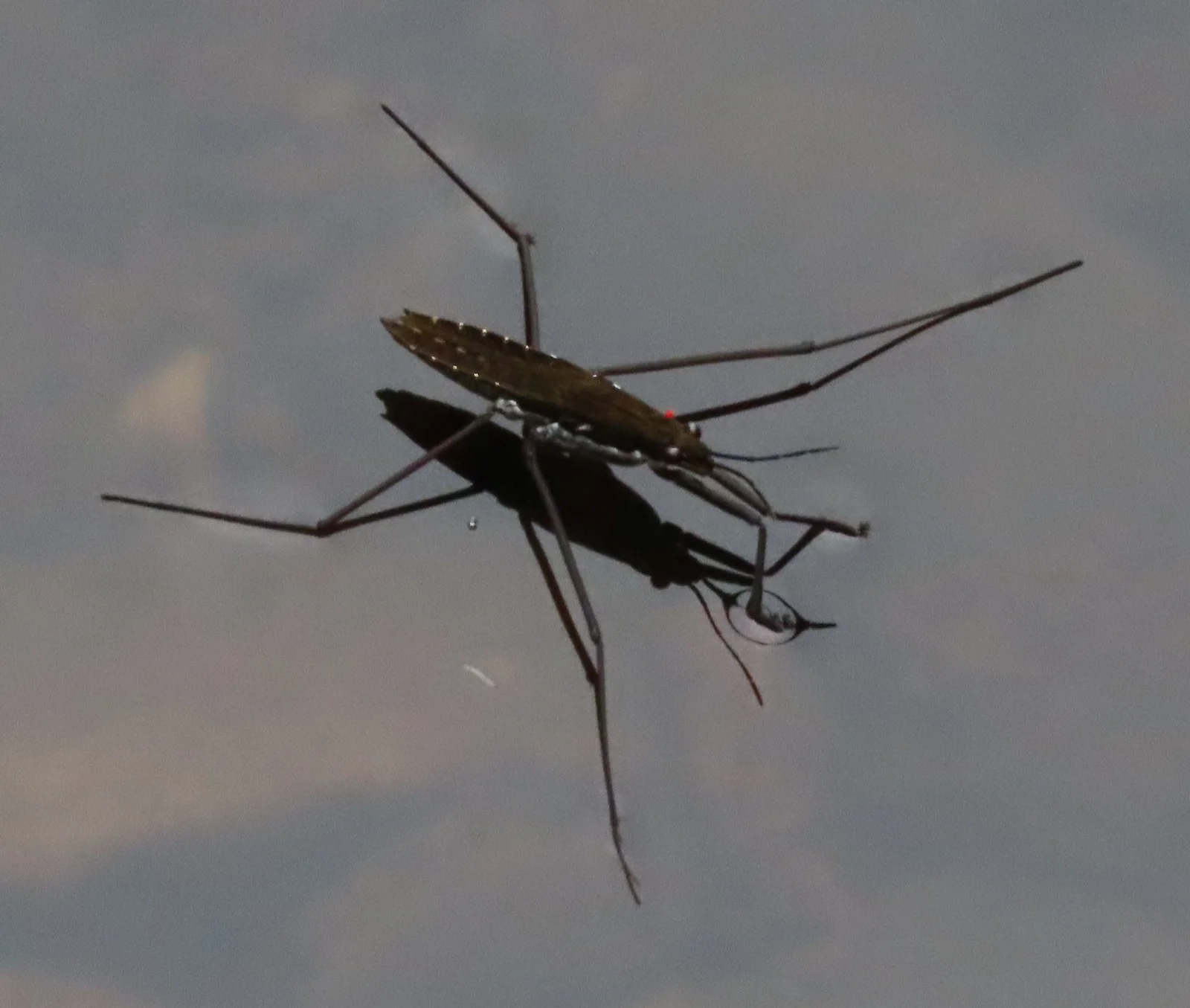
Water strider Aquarius remigis, about 11–14 mm long, photographed on water, native color; legs spread on the surface.

Mechanism explainer[10−3–10−2 m]

Water Strider: The Dimples Under Its Feet Hold Its Weight

A water strider 8–15 mm long rests in shallow dimples on the water. Surface tension along each rim holds it up: the water it pushes aside weighs what it does.

Image: “Aquarius remigis 140810489” by Jason Swanson (2021) · CC0 1.0

"Aquarius remigis 140810489" by Jason Swanson — https://commons.wikimedia.org/wiki/File:Aquarius_remigis_140810489.jpg — CC0 1.0 (https://creativecommons.org/publicdomain/zero/1.0/)
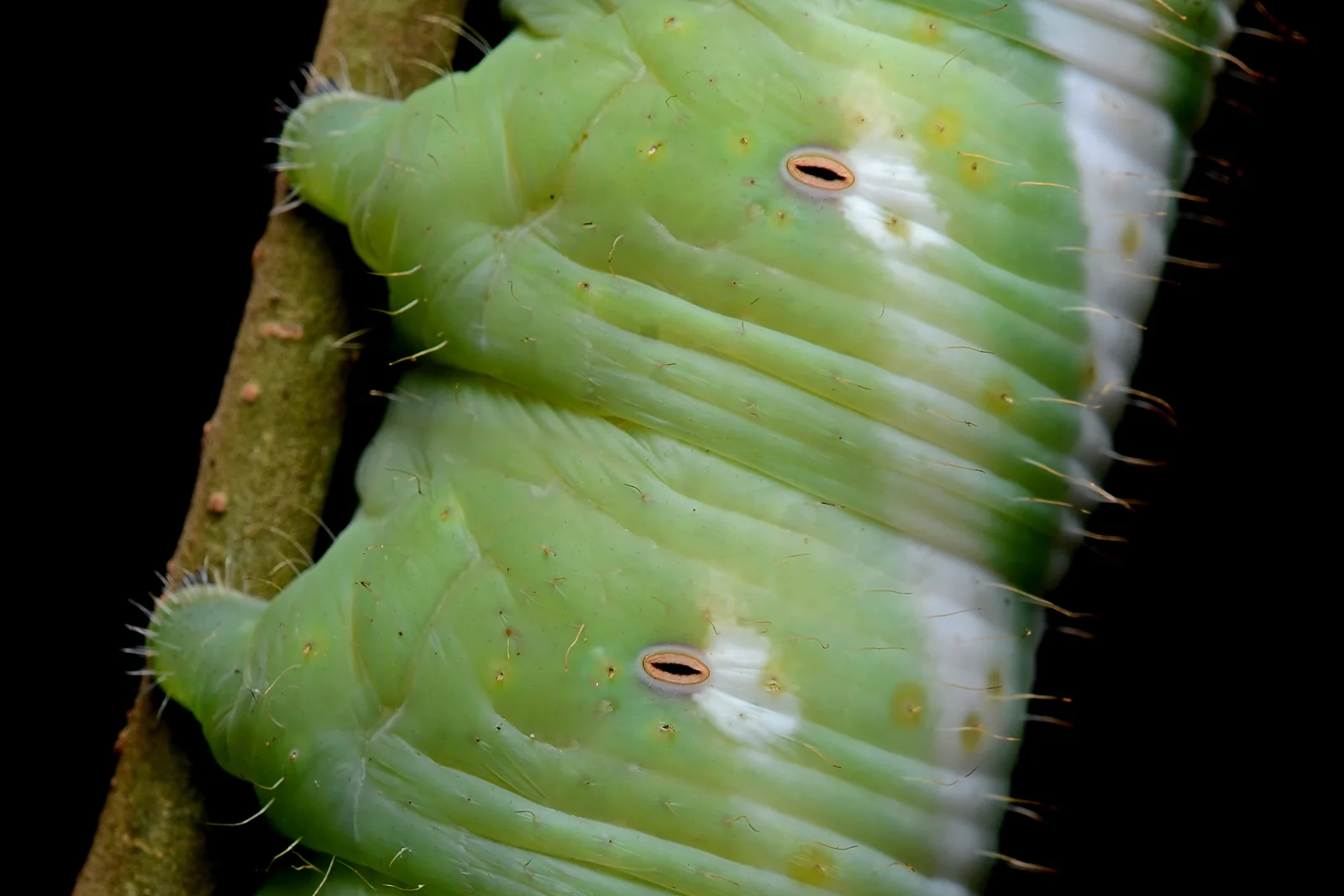
Hawk-moth caterpillar, side close-up, photo in native color; two oval spiracles with orange rims and dark central slits on neighbouring segments.

Mechanism explainer[10−7 m]

How Do Insects Breathe? Through Air Tubes, Not Lungs

Insects have no lungs: air enters at spiracles and runs down branching tubes almost to the cells. Why diffusion demands that, and the giant-insect debate.

Image: “Flickr - ggallice - Spiracles” by Geoff Gallice (2011) · CC BY 2.0

"Flickr - ggallice - Spiracles" by Geoff Gallice — https://commons.wikimedia.org/wiki/File:Flickr_-_ggallice_-_Spiracles.jpg — CC BY 2.0 (https://creativecommons.org/licenses/by/2.0/)

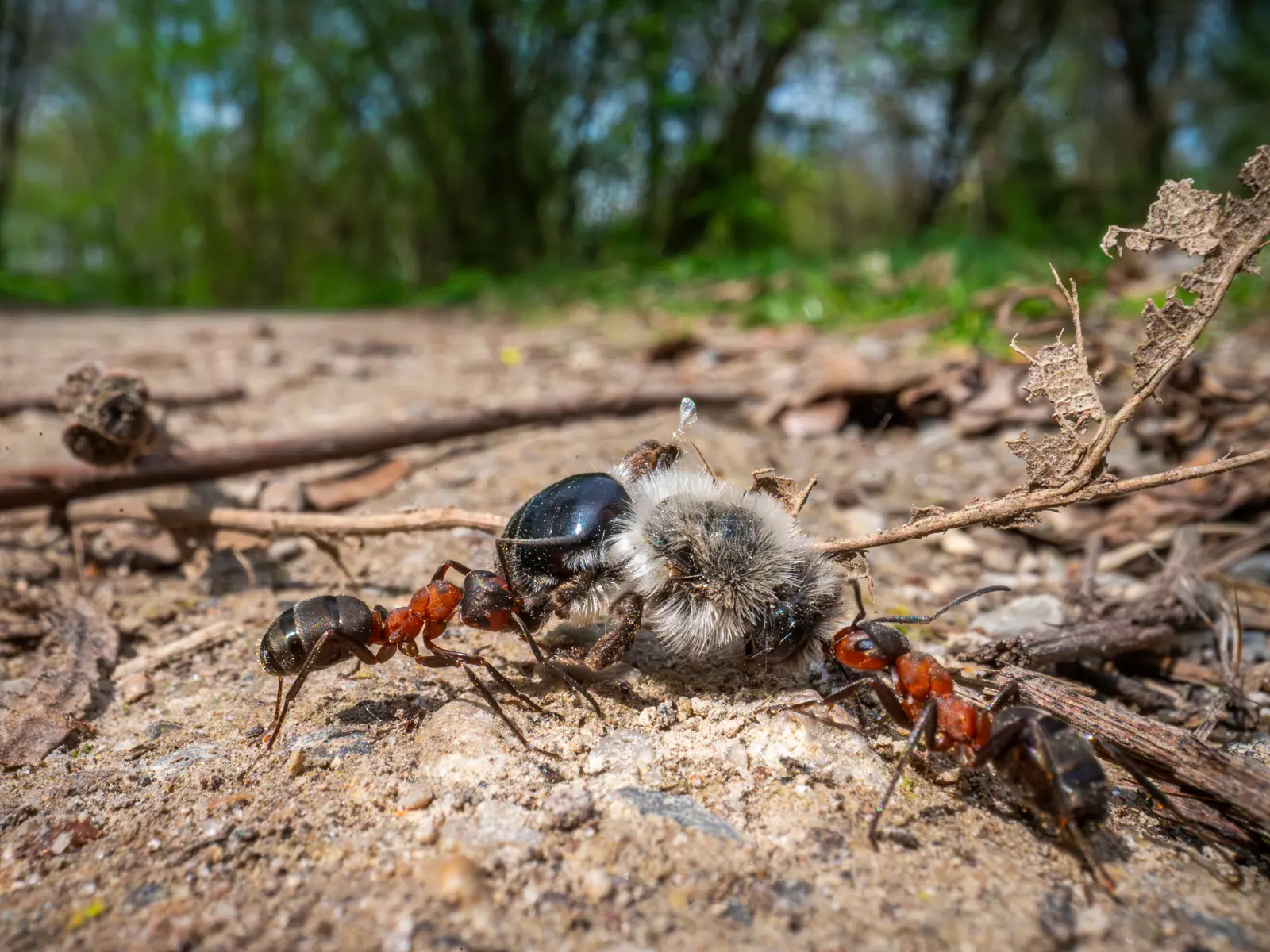
Red wood ants, workers 4.5–9 mm long, photograph, native color; two ants grip a dead bee much bigger than either of them on sandy ground.

Scale estimate[10−3–10−2 m]

Ants: Strong for Their Weight, Mostly Because They're Small

In the lab, seed-harvester ants carried loads up to 6 times their mass and leaf-cutters bit with about 2,000–2,800 times their weight, mostly due to small size.

Image: “Rote Waldameisen mit Beute 01” by Stephan Sprinz (2026) · CC BY 4.0

"Rote Waldameisen mit Beute 01" by Stephan Sprinz — https://commons.wikimedia.org/wiki/File:Rote_Waldameisen_mit_Beute_01.jpg — CC BY 4.0 (https://creativecommons.org/licenses/by/4.0/)

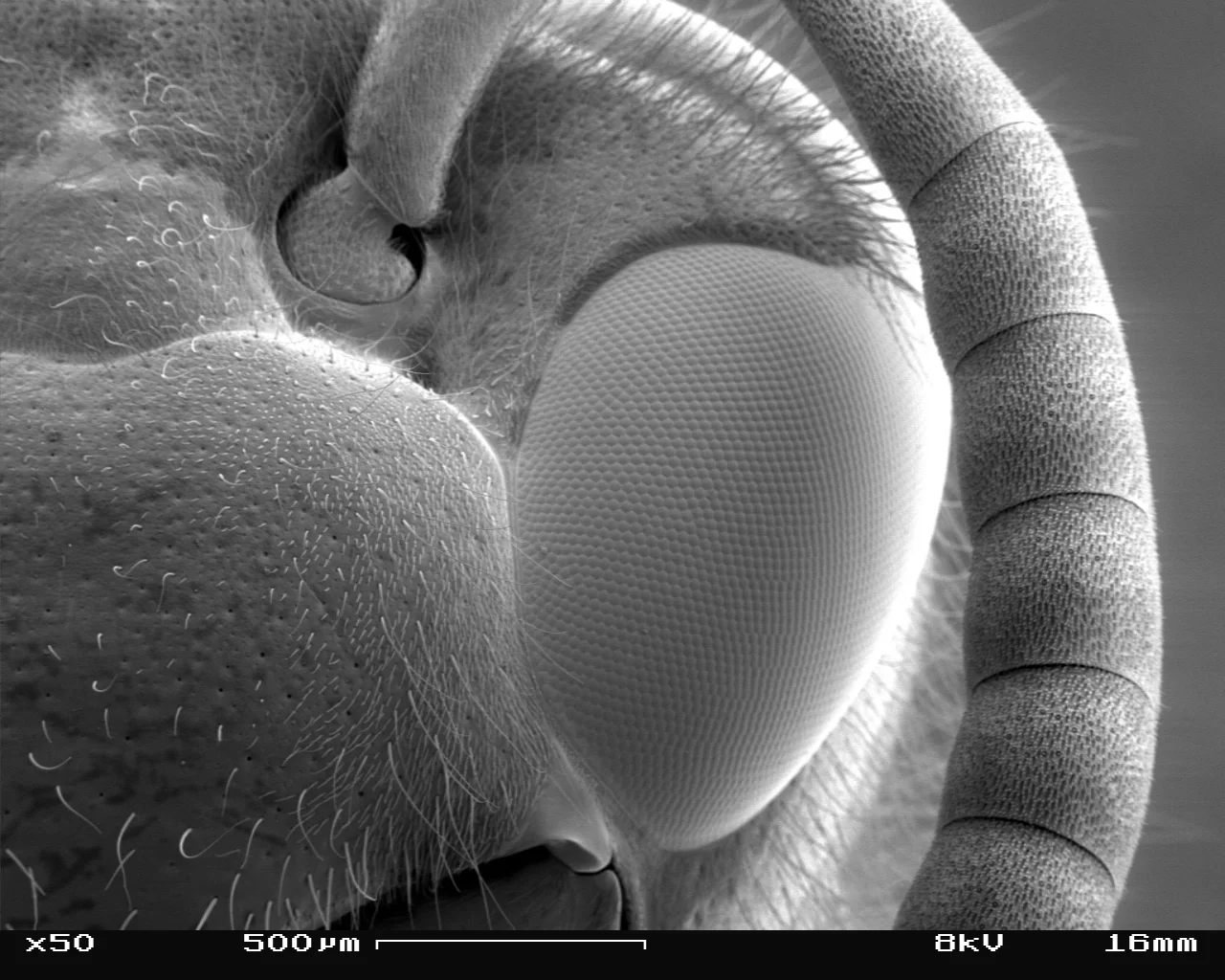
German wasp head and eye, eye about 1 mm across, scanning electron micrograph, no color; hundreds of facets beside a 500 µm bar.

Field-guide entry[10−5 m]

Compound Eye: One as Sharp as Yours Would Span About 7–12 m

A 290 µm wasp's compound eye has 29 facets; dragonflies have up to 30,000. Fruit-fly, honeybee and German wasp lenses are 15–29 µm; narrower ones blur more.

Image: “Vespula germanica SEM Eye 01” by SecretDisc (2007) · CC BY 2.5

"Vespula germanica SEM Eye 01" by SecretDisc — https://commons.wikimedia.org/wiki/File:Vespula_germanica_SEM_Eye_01.jpg — CC BY 2.5 (https://creativecommons.org/licenses/by/2.5/)

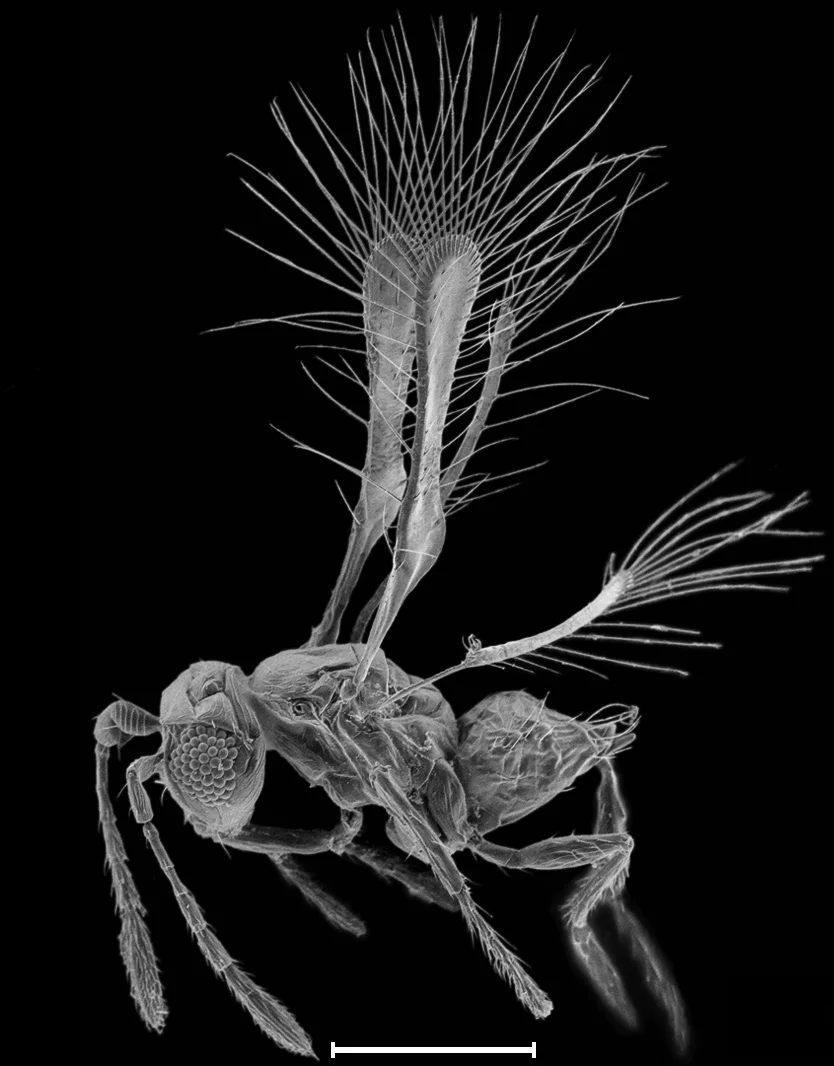
Tinkerbella nana female, about 0.22 mm long, scanning electron micrograph, no color; narrow wings edged with long bristles.

Field-guide entry[10−4 m]

Smallest Adult Insect as of 2013: Wingless, Down to 0.13 mm

By a 2013 count, the smallest adult insects are males of one fairyfly, 0.13–0.24 mm long and shorter than some single cells. What fits inside, and how they fly.

Image: “Tinkerbella nana female Fig8” by John T. Huber, John S. Noyes, J. Read (2013) · CC BY 3.0

"Tinkerbella nana female Fig8" by John T. Huber, John S. Noyes, J. Read — https://commons.wikimedia.org/wiki/File:Tinkerbella_nana_female_Fig8.jpg — CC BY 3.0 (https://creativecommons.org/licenses/by/3.0/)

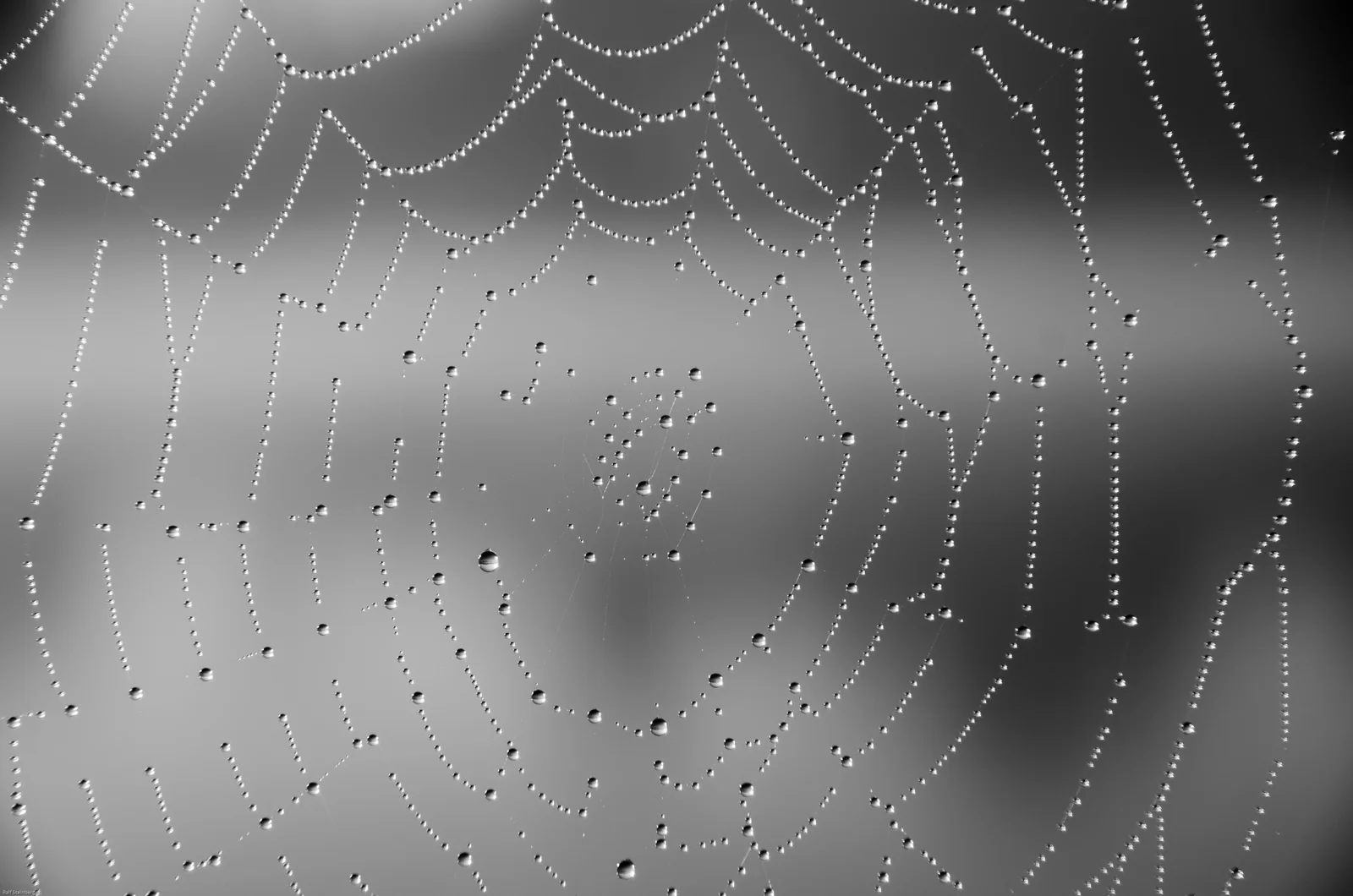
Orb web beaded with dew, close-up photo in black and white; rows of droplets trace the spiral and radial threads around the hub.

Mechanism explainer[10−6 m]

Spider Silk: Dragline Is Tougher Than High-Tensile Steel

Spider dragline averaged 2–5.5 µm across in two studies. By weight, Araneus silk is about 2–4 times stronger than high-tensile steel; by width, it is weaker.

Image: “Spider web with morning dew (31532538535)” by Ralf Steinberger (2016) · CC BY 2.0

"Spider web with morning dew (31532538535)" by Ralf Steinberger — https://commons.wikimedia.org/wiki/File:Spider_web_with_morning_dew_(31532538535).jpg — CC BY 2.0 (https://creativecommons.org/licenses/by/2.0/)