Skip to the main content
Ants, Cells & Atoms

Life and matter below the width of a hair.

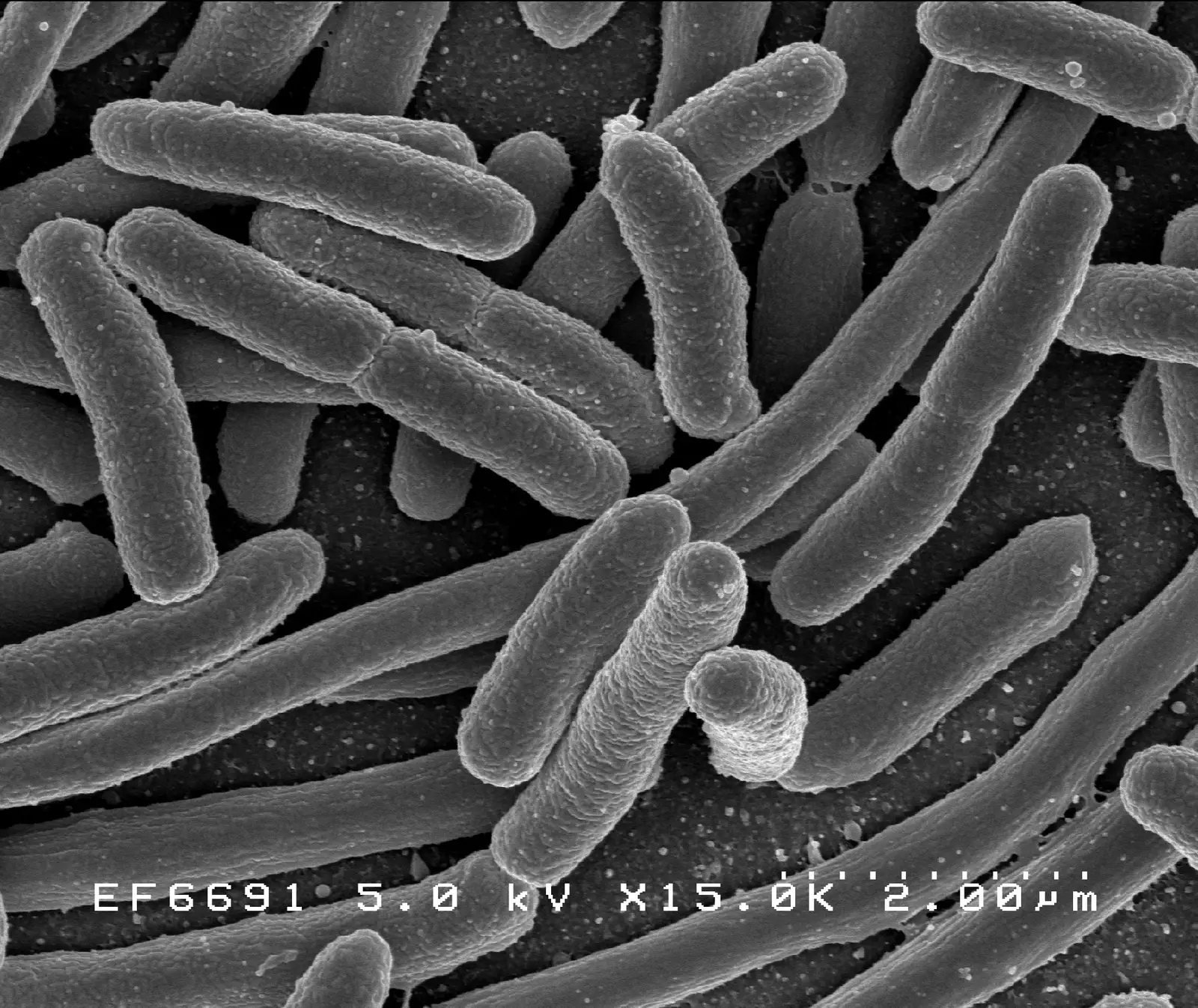
Escherichia coli cells, rods about 1 µm wide and a few µm long, scanning electron micrograph, native grey; 2.00 µm scale bar printed in the image.

Scale estimate[10−6 m]

How Many Cells in the Human Body? About Half Are Bacteria

A 70 kg reference man holds about 3.0×10¹³ human cells and about 3.8×10¹³ bacteria, so bacteria are roughly half the cells in the body, within 25% uncertainty.

Image: “E. coli Bacteria (7316101966)” by NIAID (2002) · Public domain

"E. coli Bacteria (7316101966)" by NIAID (2002) — https://commons.wikimedia.org/wiki/File:E._coli_Bacteria_(7316101966).jpg — Public domain (work of a United States federal agency (NIAID, part of NIH), public domain in the United States under 17 U.S.C. §105; Commons tag PD-USGov-NIH-NIAID; Flickr source page credits NIAID with no contractor note; dated 2002-11-14 in the file metadata; no copyright term applies in the EU for a US government work released as public domain by its author agency (used as the source's explicit PD mark))
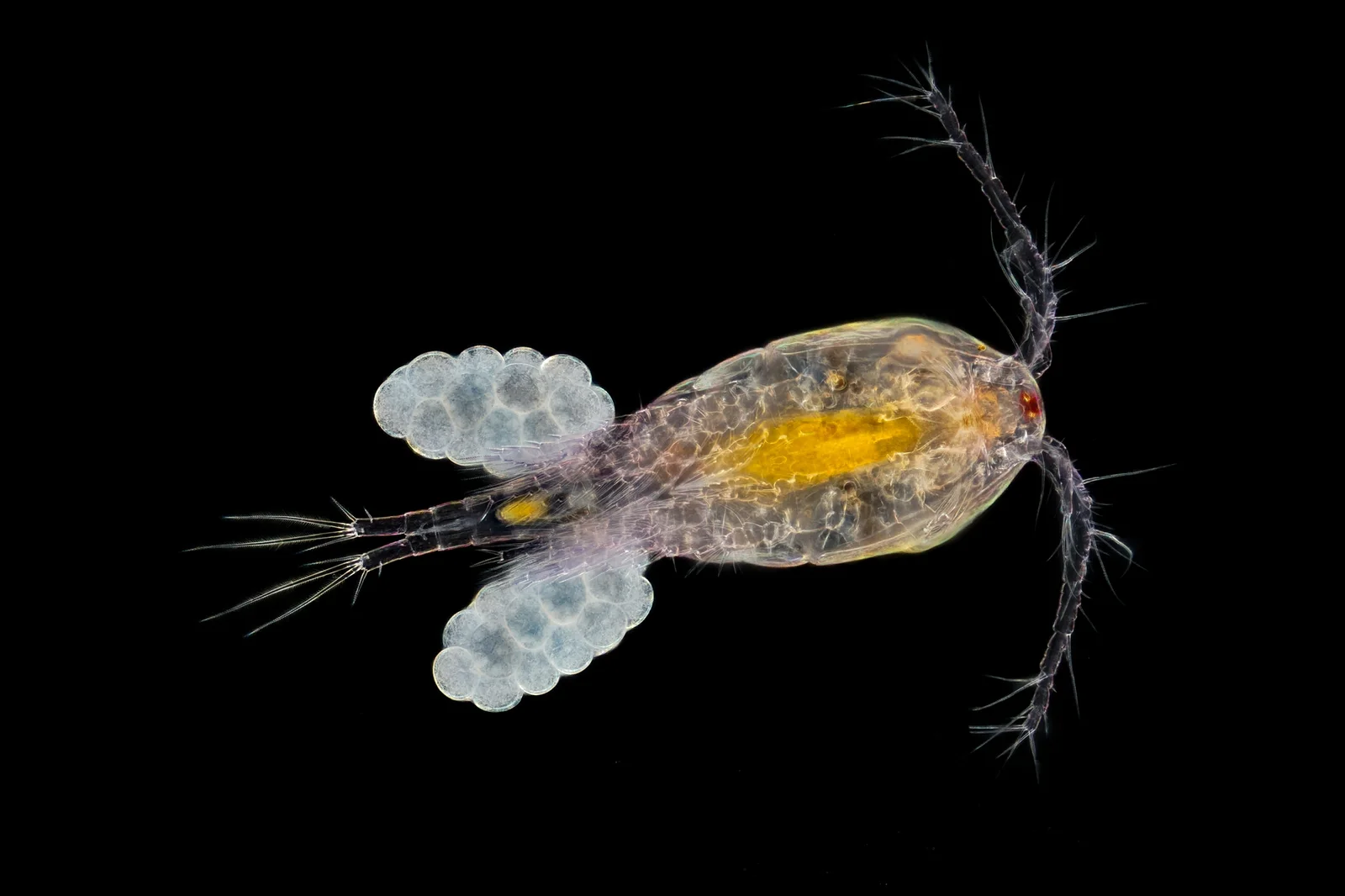
Female Cyclops copepod with two egg sacs; copepods in one study were 0.3–3.0 mm long; dark-field micrograph, no stain stated; bristled antennae.

Mechanism explainer[10−4–10−3 m]

Reynolds Number: Why a Bacterium Can't Coast and a Fish Can

The Reynolds number weighs inertia against stickiness. In water at 20 °C it reaches 1 at 0.32–1.0 mm for swimmers moving 1–10 body lengths a second.

Image: “Oczlik (Cyclops) - samica” by Mikron86 (2025) · CC BY 4.0

"Oczlik (Cyclops) - samica" by Mikron86 — https://commons.wikimedia.org/wiki/File:Oczlik_(Cyclops)_-_samica.jpg — CC BY 4.0 (https://creativecommons.org/licenses/by/4.0/)

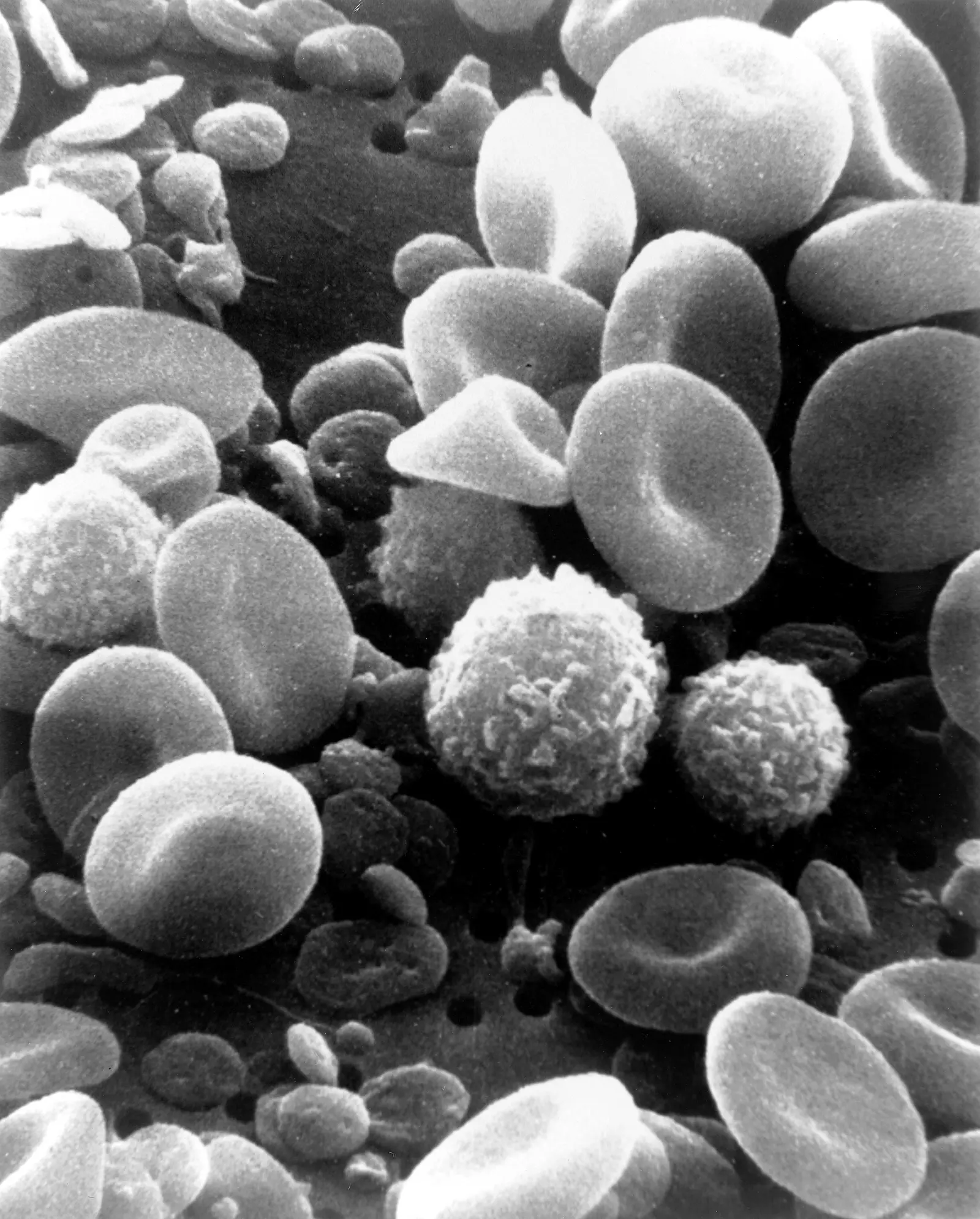
Human blood cells, red cells about 100 µm³ each, scanning electron micrograph, native grey; dimpled discs beside round, ruffled white cells.

Scale estimate[10−7–10−4 m]

How Big Is a Cell? Most Are a Hair's Width or Far Narrower

Most cells are about 0.4–100 µm across. Single cells run from bacteria about 0.2 µm wide to an ostrich egg; a human axon or a many-nucleus alga can pass 1 m.

Image: “SEM blood cells” by Bruce Wetzel and Harry Schaefer, National Cancer Institute (1982) · Public domain

"SEM blood cells" by Bruce Wetzel and Harry Schaefer, National Cancer Institute (1982) — https://commons.wikimedia.org/wiki/File:SEM_blood_cells.jpg — Public domain (work of United States federal employees at the National Cancer Institute (NIH), public domain in the United States under 17 U.S.C. §105; Commons tag PD-USGov; the NCI Visuals Online source states that all images are in the public domain and may be reproduced without permission, with credit to the listed source or author; dated February 1982; used in the EU on the source's explicit public-domain statement)

Illustration: a hair and a grain of sand seen through a magnifying glass on a table, not to scale; through the lens the hair looks like a wide band. Illustration

Scale estimate[10−10 m]

How Small Is an Atom? For Most Elements, About 0.1–0.5 nm

Atoms of most elements are about 0.1–0.5 nm across, depending on where the edge is drawn, so a typical 50–100 µm hair spans 100,000 to a million of them.

Image: Illustration: Ants, Cells & Atoms, all rights reserved

Illustration: Ants, Cells & Atoms. Generated schematic illustration — not a photograph, micrograph or specimen record. © Ants, Cells & Atoms, all rights reserved.

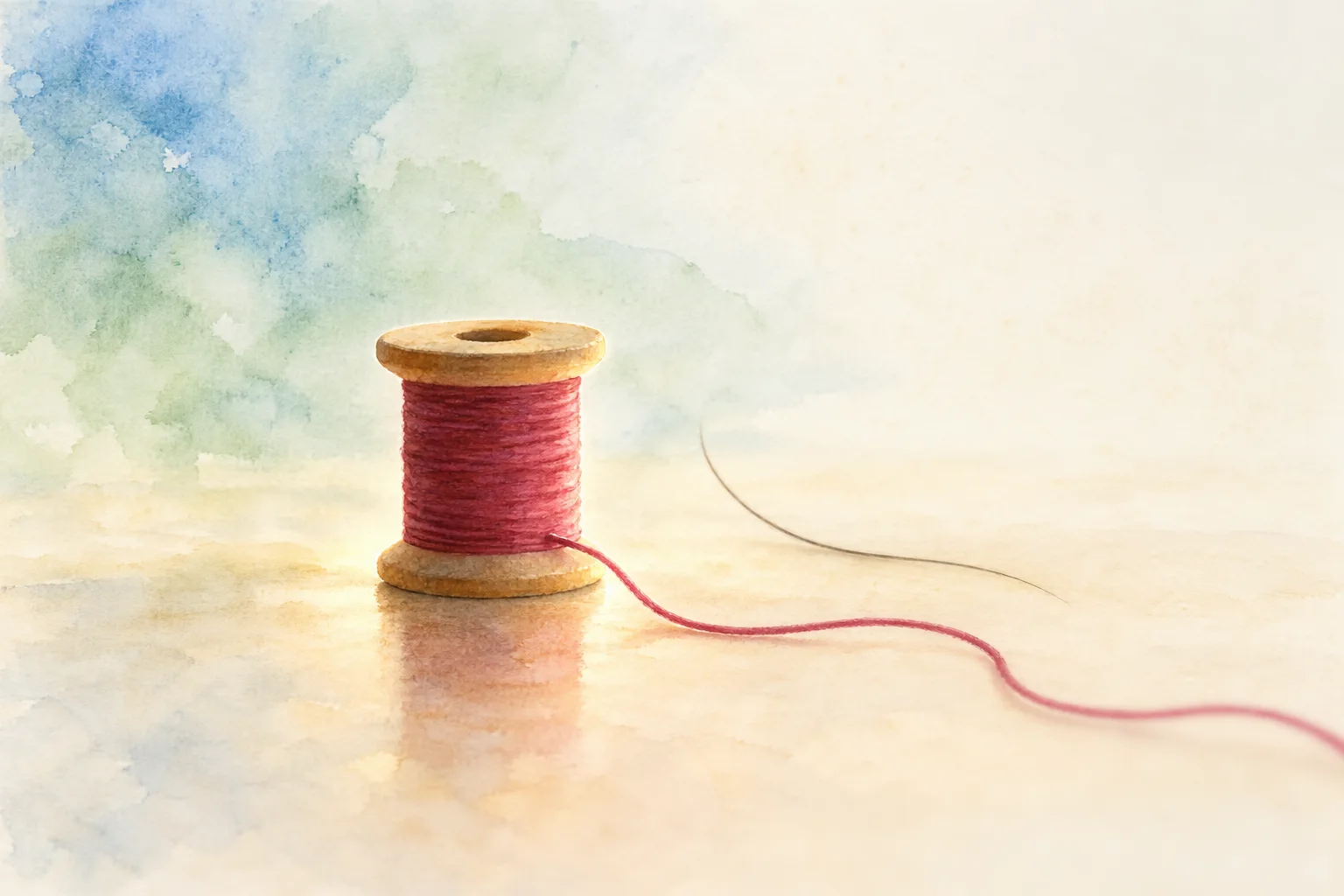
Illustration: a sewing spool with thread pulled loose across a pale surface, a single hair beside it, not to scale; the thread runs out of frame. Illustration

Scale estimate[10−9 m]

How Long Is DNA? About 2 m per Diploid Human Nucleus

Stretched out, the DNA in one diploid human nucleus is about 2 m (2.0–2.4 m by two routes), yet 84% of a reference man's cells, the red blood cells, carry none.

Image: Illustration: Ants, Cells & Atoms, all rights reserved

Illustration: Ants, Cells & Atoms. Generated schematic illustration — not a photograph, micrograph or specimen record. © Ants, Cells & Atoms, all rights reserved.

Clarkia pulchella in flower, pollen grains about 100 µm across; outdoor photograph, native color; four pink-purple petals, each with three lobes.

Mechanism explainer[10−6 m]

Brownian Motion: Why a 1 µm Bead in Water Never Sits Still

Brownian motion is the jiggle of small particles hit unevenly by moving molecules. A 1 µm bead in water at 20 °C spreads about 0.9 µm along one axis a second.

Image: “Clarkia pulchella Boise County USA” by Matt Berger (2023) · CC BY 4.0

"Clarkia pulchella Boise County USA" by Matt Berger — https://commons.wikimedia.org/wiki/File:Clarkia_pulchella_Boise_County_USA.jpg — CC BY 4.0 (https://creativecommons.org/licenses/by/4.0/)